- Inadequate hydrology and hydraulic studies can lead to severe road damage and drainage failure
Hydrology and Hydraulic Studies in Oman for Roads, Stormwater Drainage, and Wadi Crossings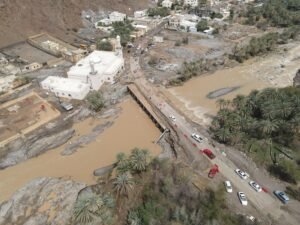
Hydrology and hydraulic studies are essential for the proper design of roads, wadi crossings, culverts, open channels, and stormwater drainage systems in Oman. The performance of any infrastructure project depends on understanding runoff behavior, natural drainage paths, expected discharge, and the hydraulic capacity of proposed structures to safely convey water without causing damage to roads, nearby land, or surrounding facilities.
In many parts of Oman, seasonal rainfall and flash floods can create serious risks if the design is not based on proper engineering analysis. For this reason, watershed delineation, flow path assessment, time of concentration, design discharge estimation, and hydraulic verification of culverts and channels are critical steps in developing a safe and practical engineering solution.
Importance of Hydrology Study
A hydrology study evaluates how rainfall is transformed into runoff within a watershed. It typically includes catchment delineation, terrain review, drainage pattern assessment, time of concentration calculation, design rainfall selection, and peak discharge estimation at critical crossing or collection points.
This study supports important engineering decisions such as:
Identifying suitable culvert locations
Estimating required discharge capacity
Assessing flood risk at road crossings
Understanding the effect of the project on natural flow paths
Determining the need for diversion channels, collection basins, or protection works
Importance of Hydraulic Study
A hydraulic study focuses on the behavior of water within existing or proposed drainage structures such as pipe culverts, box culverts, Irish crossings, open channels, ditches, and inlet or outlet protection systems. Its purpose is to verify that the structure can safely pass the design discharge without road overtopping, excessive upstream water level rise, erosion, scour, or damage to surrounding works.
A hydraulic study also helps in:
Checking the adequacy of existing culverts
Selecting proper dimensions for new structures
Evaluating flow velocity and its impact on soil and structures
Designing erosion and scour protection
Reducing the risk of pavement damage and embankment instability
Scope of Services
Hydrology and hydraulic services may include:
Watershed delineation and flow path identification
Rainfall and storm intensity assessment
Time of concentration calculations
Peak discharge estimation
Evaluation of road crossings at wadis
Design of pipe culverts and box culverts
Analysis of open channels and drainage ditches
Design of riprap, inlet protection, and outlet protection
Assessment of existing flooding or erosion problems
Recommendation of practical drainage improvement solutions
Common Applications in Oman
These studies are commonly required for:
New road design projects
Road rehabilitation and maintenance works
Internal roads in residential or development areas
Wadi crossing locations
Stormwater drainage systems
Flood protection works
Upgrading undersized or failed culverts
Sites affected by natural drainage paths or side runoff
In some cases, existing culverts may not be located on the natural wadi alignment. In such situations, the study may recommend approach channels, runoff diversion measures, additional drainage structures, or suitable protection works.
Engineering Approach
A sound engineering approach begins with collecting available data from survey, drawings, topographic mapping, imagery, and field observations. The analysis then evaluates catchment characteristics, runoff generation, drainage behavior, and the performance of existing or proposed hydraulic elements.
A proper solution should not rely on discharge calculations alone. It should also consider:
Road user safety
Protection of road embankment and shoulders
Reduction of erosion and scour risk
Ease of construction and maintenance
Suitability of the solution to actual site conditions
Compatibility with natural drainage behavior as much as possible
Why Professional Study Matters
A professional study helps reduce future risk, avoid costly redesign during construction, and support technical decisions submitted to clients or authorities. It provides a clear engineering basis for selecting the proper drainage structure, dimensions, levels, and protection requirements.
For projects located within wadi areas or flood-prone sites, any inaccurate estimate may lead to overtopping, erosion, culvert failure, or downstream damage. Therefore, an accurate study is not a formal step only. It is a key part of project success.
Our Expertise
We provide hydrology and hydraulic studies that support roads, infrastructure, drainage, and protection works, with a focus on practical engineering solutions suited to actual site conditions in Oman. This includes watershed analysis, wadi crossing assessment, culvert and channel design, drainage verification, and erosion protection recommendations.
Contact Us
For projects requiring hydrology and hydraulic studies for roads, wadi crossings, culverts, or stormwater drainage in Oman, professional engineering support can be provided based on practical design experience and sound technical analysis.